
Tengu
天狗
"Dreams are but a mirage. Chop wood, carry water."
Protectors
of the Forest
森の守護者
The yamabushi were the first humans to bravely climb the wild mountains of Japan; the Tengu were already there. Tengu are keepers of the mountaintops, fallen sun gods with birdlike features and red faces, fierce warriors feared even by the most ruthless of samurai. They approach combat with wisdom first and weapons second, wielding swords and the tessen — a war fan capable of summoning devastating winds.
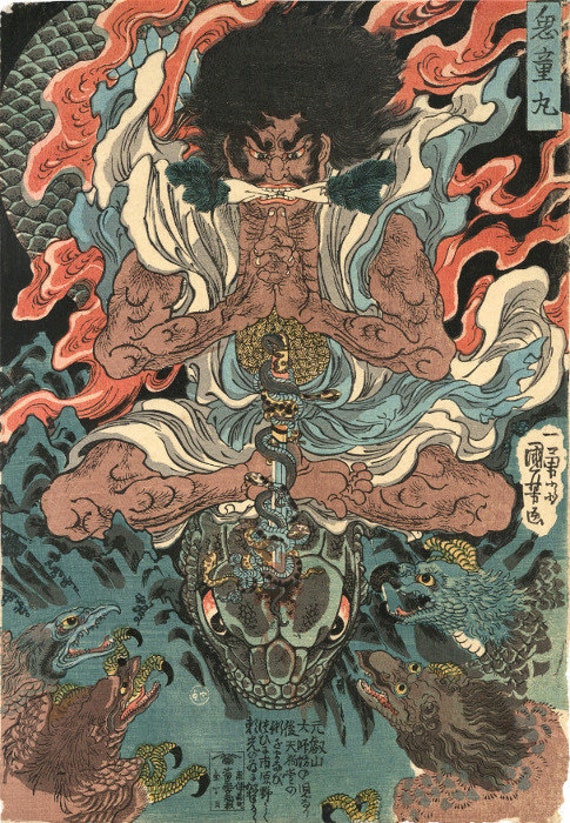
First recorded in the Nihon Shoki of 720 CE, the Tengu have evolved across centuries of Japanese folklore from malevolent bird-demons into noble guardians of sacred mountains. The earliest Tengu, known as Karasu Tengu, bore the wings and beaks of crows. Over time, the more powerful Daitengu emerged — human-faced beings with impossibly long noses, dressed in the robes of yamabushi mountain ascetics.
Most peaks in Japan are guarded by these Yokai known as Tengu. Legend has it that Sojobo guards Mount Kurama with the force of a thousand Tengu, while Daranibo guards the holy Mount Fuji. In the late hours, pilgrims can still hear the Tengu at work: falling trees, beating taiko drums, and flapping their massive wings through the tree-tops of ancient forests.
The Tengu's dual nature — fierce protector and wise teacher — makes them among the most complex figures in Japanese mythology. They punish the vain and the arrogant, yet they also choose worthy students to receive their supernatural martial knowledge. To encounter a Tengu is to face a test: those who approach with humility may receive wisdom beyond measure; those who come with pride will be humbled.
"Tengu approach combat with wisdom first and weapons second. They wield swords and the tessen, a war fan capable of summoning devastating winds."
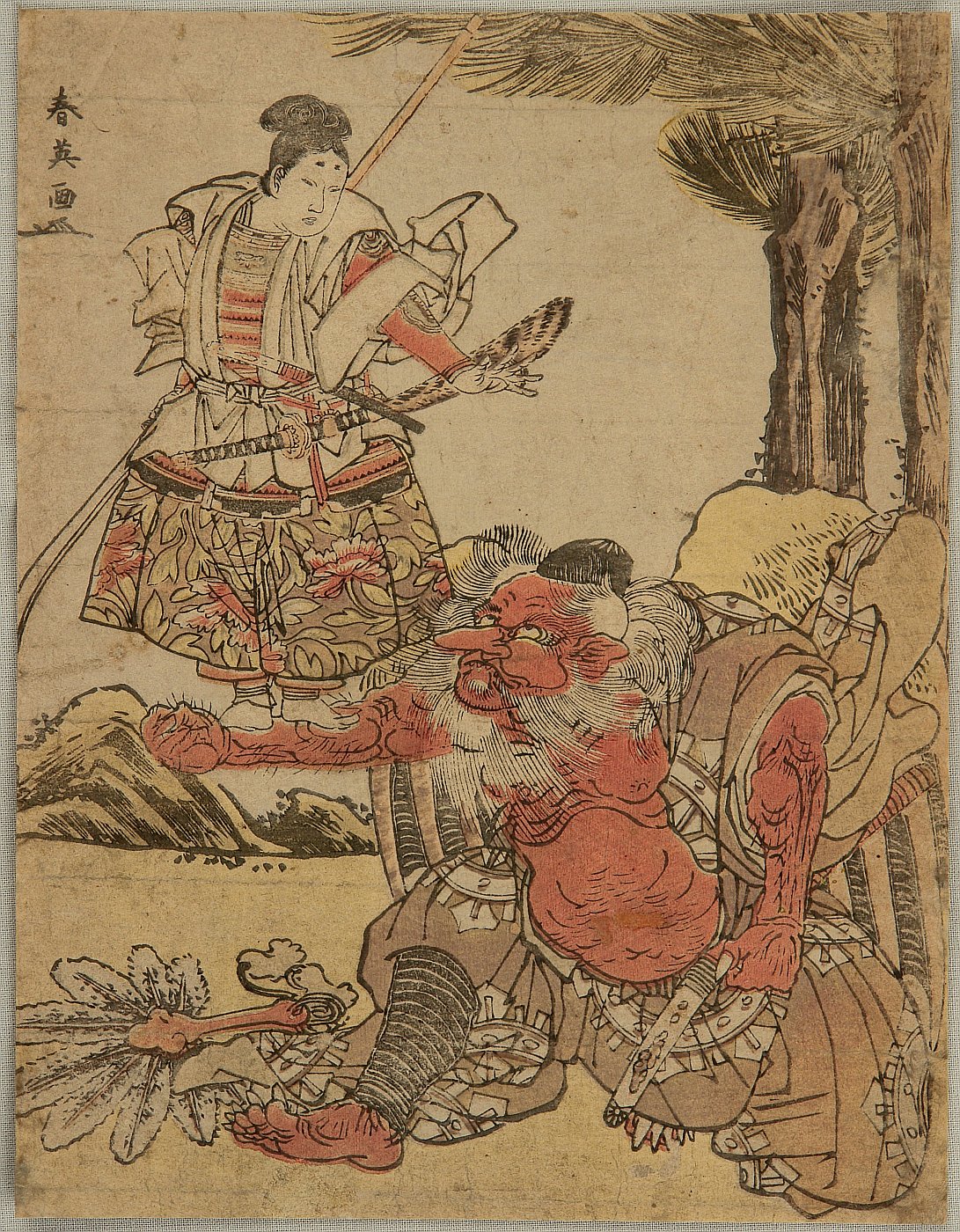
Edo-period woodblock print — Tengu warrior
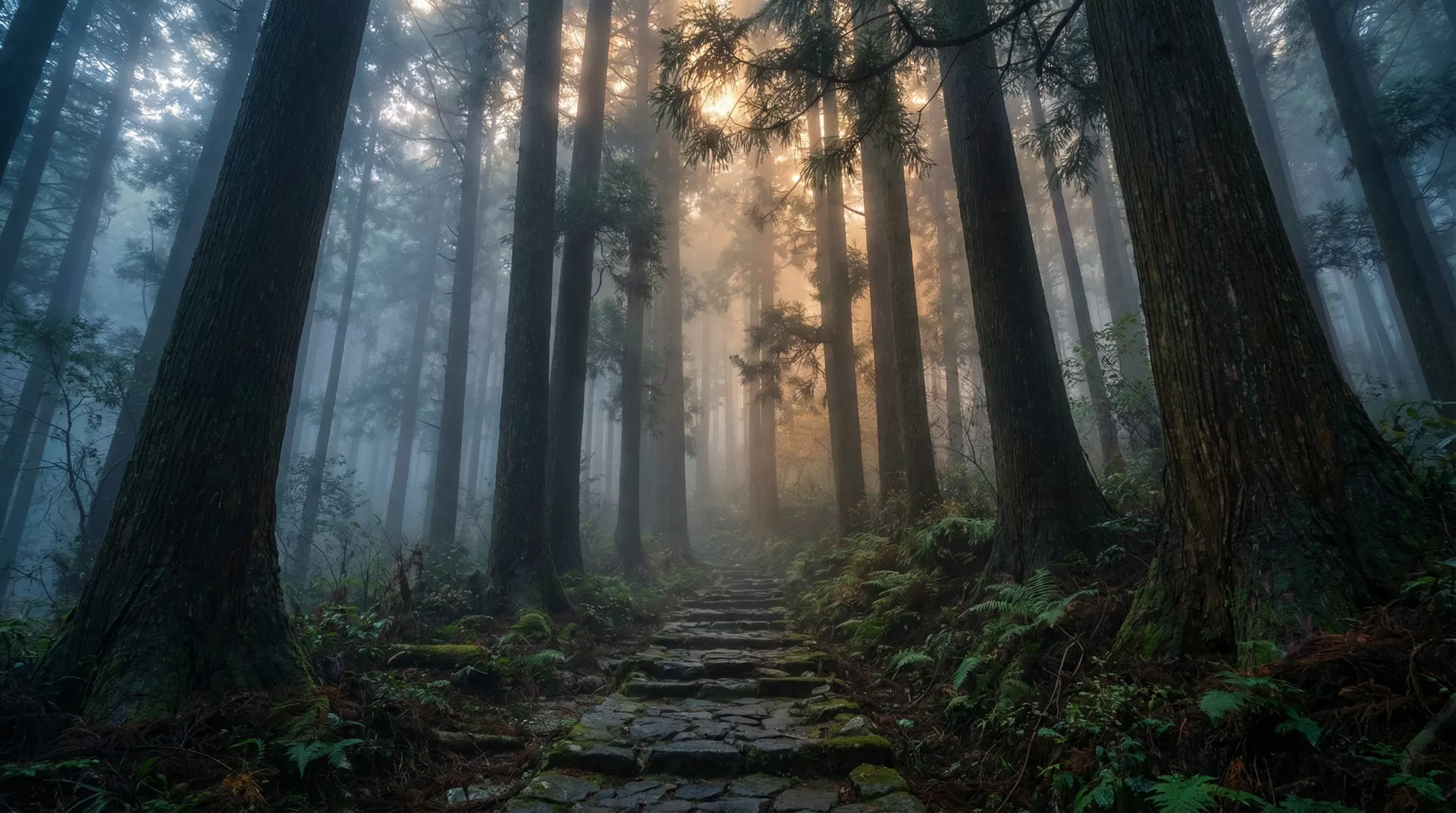
The ancient mountain paths where Tengu are said to dwell
Yuko Shimizu
清水裕子 — Illustrator, New York City
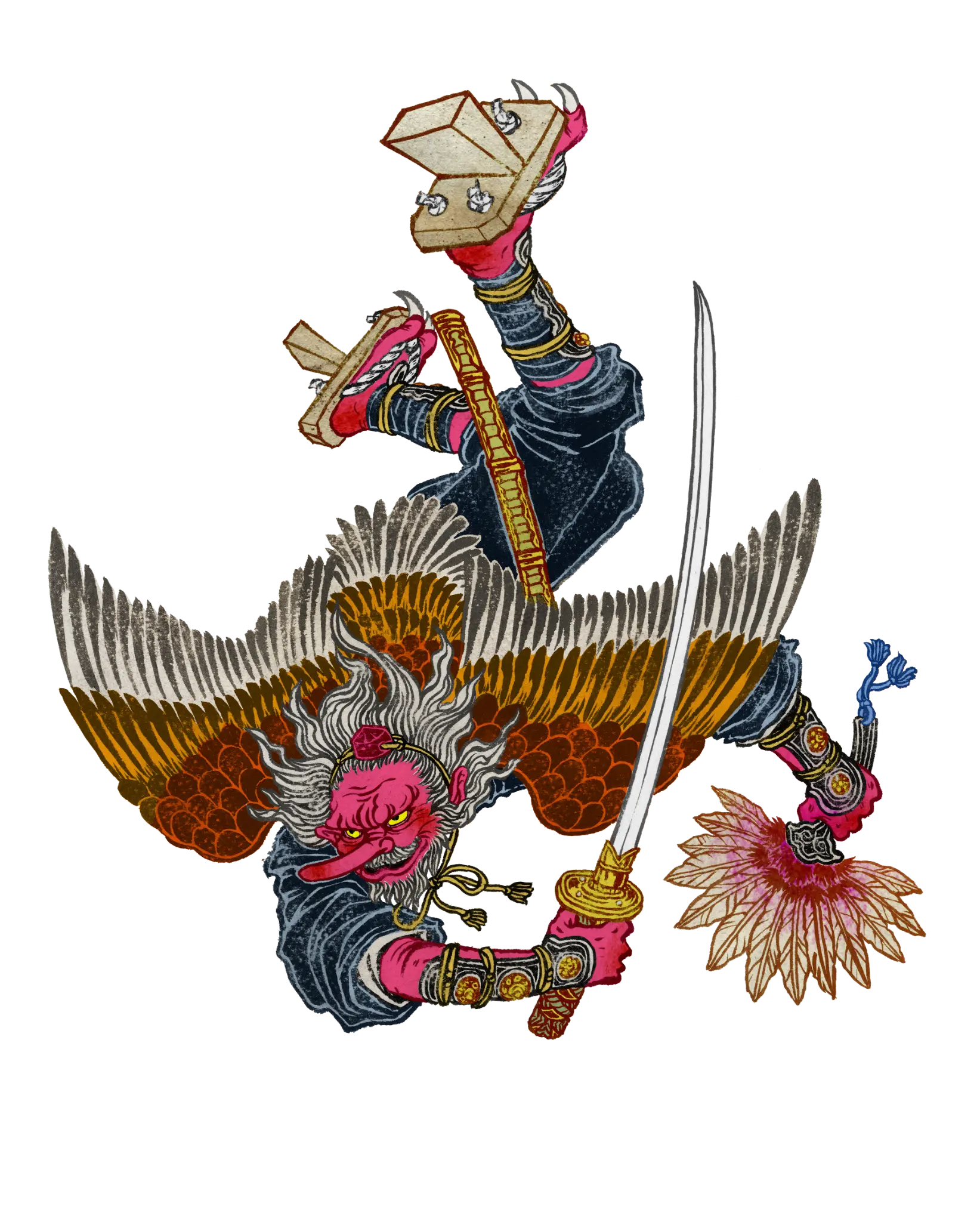
For the Tengu expression, Shimizu immersed herself in Edo-period depictions of Karasu and Daitengu, studying the evolution from bird-demon to noble warrior across centuries of Japanese art. The challenge was to honor both forms — the primal ferocity of the crow-Tengu and the dignified authority of the long-nosed Daitengu — in a single dynamic composition.
Her research took her through the works of Toriyama Sekien, Kuniyoshi, and Hokusai, each of whom depicted Tengu with distinct personalities. Shimizu's final illustration captures the Tengu in a moment of explosive action — wings spread, weapons drawn, the tokin cap and yamabushi robes whipping in supernatural wind.
The red circle behind the figure references both the hinomaru and the vermillion of Shinto shrine gates, grounding the supernatural warrior in sacred Japanese iconography. Every detail — from the feathered hauchiwa fan to the ornate armor — was hand-inked to preserve the texture and energy of traditional woodblock printing.
Research & Immersion
Deep study of historical references and folklore texts
Composition & Ink
Translating mythology into dynamic visual composition
Final Illustration
Final hand-inked artwork for the label
"The Tengu demanded to be drawn in motion — mid-flight, mid-strike, caught between worlds. Every feather had to feel like it could cut."
Yuko Shimizu — On the Tengu Illustration

From Forest to Barrel
The Tengu expression was the inaugural release that launched the Yokai Series — a bourbon selected for its ability to embody the fierce, uncompromising nature of the forest guardians. At 143.2 proof, it arrives as a hazmat-strength spirit with the authority of a being that has stood sentinel over sacred mountains for millennia.
Cherry cobbler, sweet oak, and dark fruits covered in caramel and cacao emerge first, followed by dessert baking spice that leads to a long but delicate embrace. Like the Tengu themselves, this bourbon reveals its complexity gradually — fierce on approach, nuanced in the encounter, unforgettable in the departure.
Fewer than 100 bottles were released, each one a single barrel selection that represents the beginning of Mugen Spirit's journey to bridge Kentucky bourbon tradition with the depth of Japanese mythology.
"The liquid does not announce itself. Like the Tengu descending from the mountain, it arrives with purpose and leaves an impression that lingers long after the encounter."
Mugen Spirit
Infinite Spirit. Boundless Craft.