
Sojobo
僧正坊
"To possess the strength of a hundred Tengu is to carry the weight of a hundred lifetimes of wisdom."
The Eternal Master
of Mount Kurama
鞍馬山の永遠の師
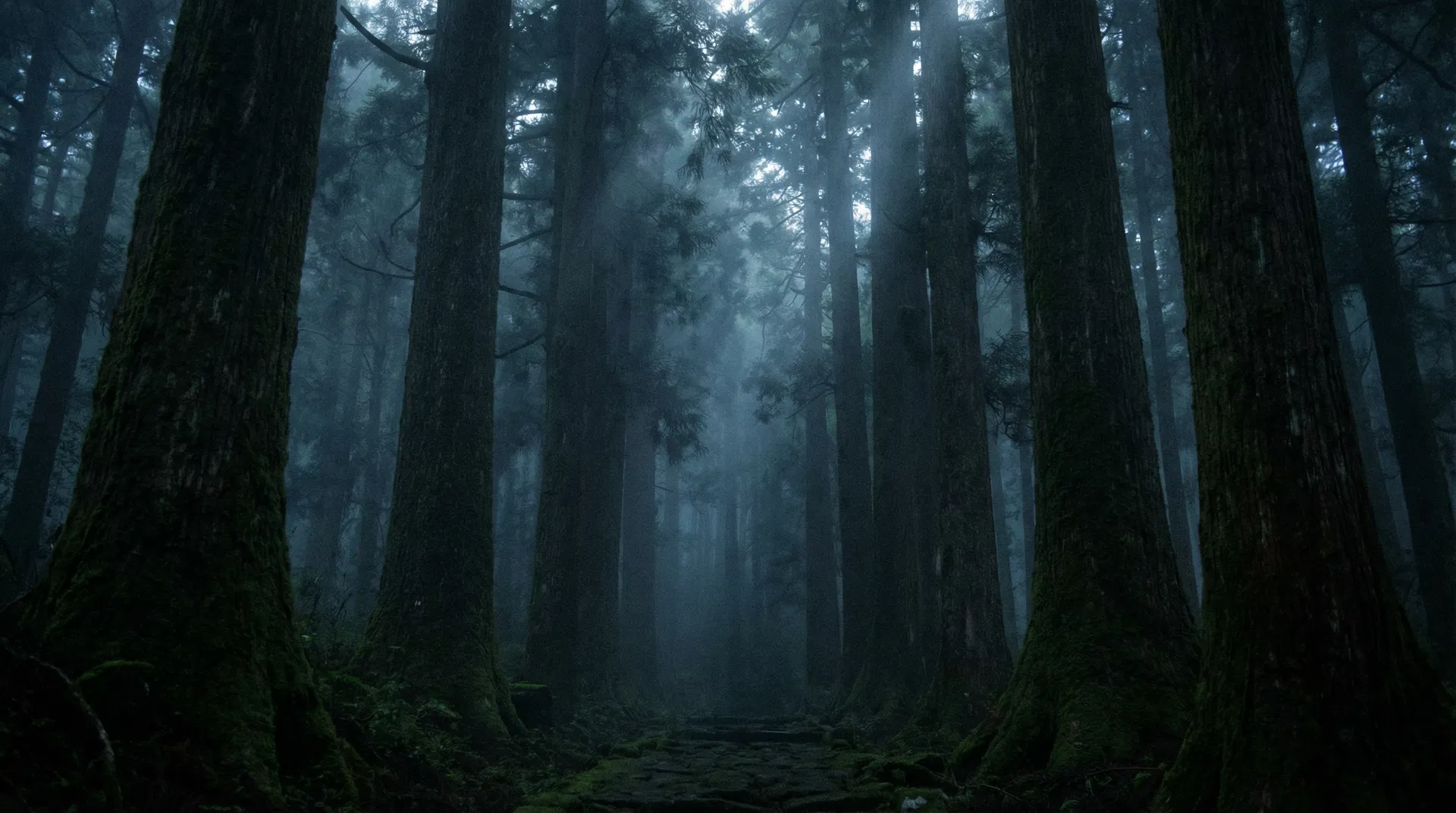
Above the ancient capital of Kyoto, shrouded in cedar forests so dense that sunlight barely reaches the forest floor, rises Mount Kurama. It is here, according to centuries of Japanese tradition, that the most powerful being in the Tengu hierarchy makes his home. Sojobo — whose name translates roughly to 'High Priest' — is the mythical king and god of the Tengu, a figure who possesses the strength of one hundred Tengu combined and whose knowledge of magic, military tactics, and swordsmanship is unsurpassed by any being, mortal or supernatural.
Unlike the lesser Tengu who serve as forest guardians and tricksters, Sojobo is depicted as an ancient yamabushi mountain ascetic with flowing white hair, an impossibly long nose, and great feathered wings. He carries the hauchiwa fan made from seven feathers, a weapon capable of summoning storms and bending the natural world to his will. His appearance alone signals a being who has transcended the boundaries between the human and the divine.
The most celebrated legend surrounding Sojobo involves his training of the young Ushiwakamaru, the childhood name of Minamoto no Yoshitsune. Sent to Kurama Temple as a boy, Yoshitsune encountered Sojobo in the deep forests and was trained in the arts of swordsmanship, strategy, and supernatural combat. This training would transform him into one of Japan's greatest warriors, whose battlefield brilliance was attributed not to human instruction but to the divine tutelage of the Tengu King.
Some traditions at Kurama Temple go further still, identifying Sojobo with Mao-son, a cosmic being said to have descended to Earth from Venus six and a half million years ago. Whether understood as folklore, spiritual allegory, or living tradition, Sojobo represents the ultimate expression of mastery — the idea that true knowledge exists beyond the reach of ordinary seeking.
"Sojobo does not teach the willing — he teaches the worthy. To seek his wisdom is to first prove that you deserve to receive it."
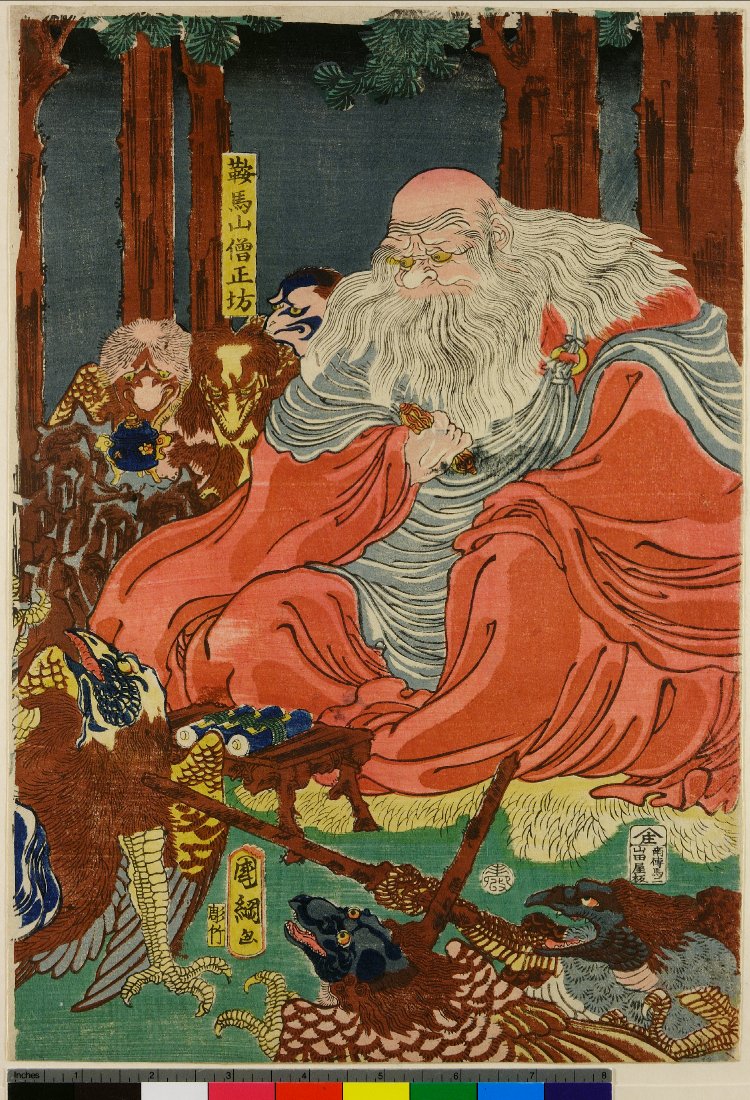
Utagawa Kunitsuna — 'Kurama-yama Sojobo' — Edo Period
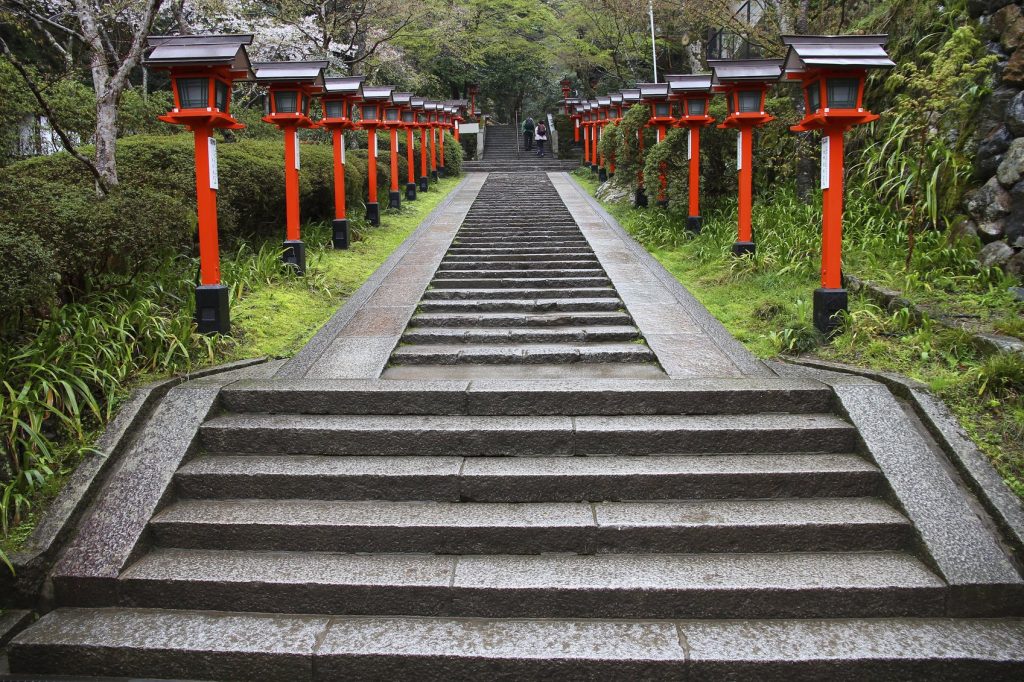
鞍馬山への道 — The Path to Mount Kurama
Yuko Shimizu
清水裕子 — Illustrator, New York City
When Mugen Spirit co-founder Kojin Tashiro set out to find an artist capable of translating centuries of Japanese mythology into a single label, the search led to Yuko Shimizu — an award-winning Japanese illustrator based in New York whose work bridges the traditions of Edo-period ukiyo-e with the energy of contemporary graphic art.
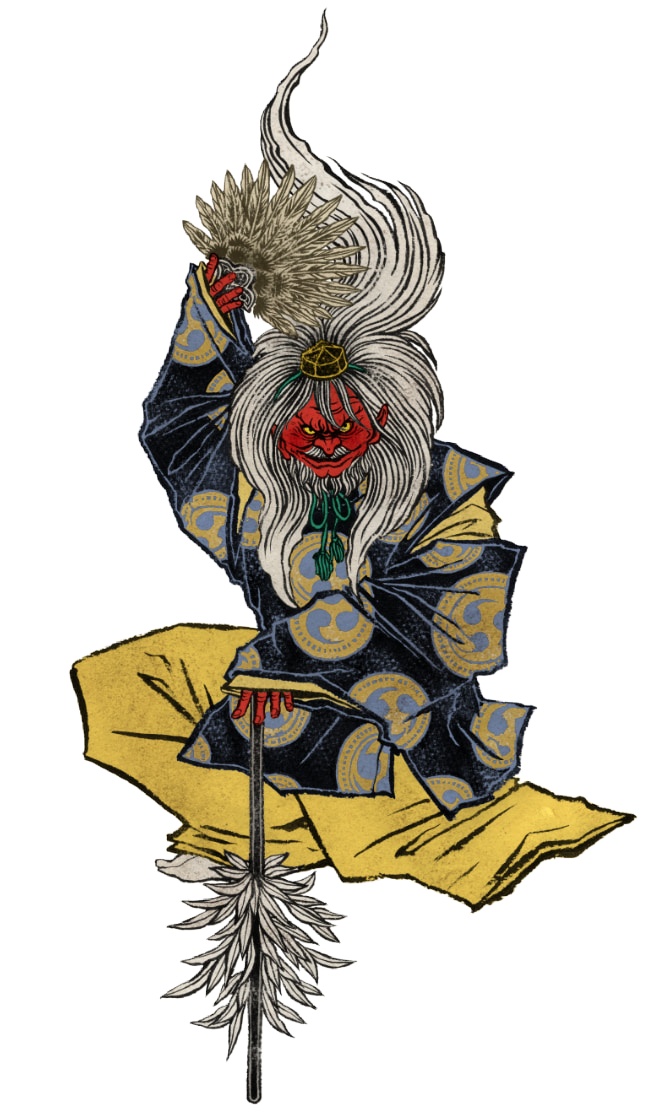
Shimizu, who teaches at the School of Visual Arts in Manhattan, brings a rare authenticity to the collaboration. Born and raised in Japan, she carries an intuitive understanding of the visual language of yokai — the weight of Sojobo's feathered wings, the authority in his ancient gaze, the supernatural wind that swirls around his hauchiwa fan.
For the Sojobo label, Shimizu began with extensive research into historical depictions, studying woodblock prints from the Edo and Meiji periods. The final illustration captures Sojobo at the peak of his power — wings spread, fan raised, eyes burning with the accumulated wisdom of a thousand years atop Mount Kurama.
Research & Immersion
Deep study of historical references and folklore texts
Composition & Ink
Translating mythology into dynamic visual composition
Final Illustration
Final hand-inked artwork for the label
"They took a while to get this out to the world because they needed the perfect barrel for the release. That patience, that refusal to rush — it mirrors the way the Tengu themselves operate."
Yuko Shimizu — On the Mugen Spirit Collaboration
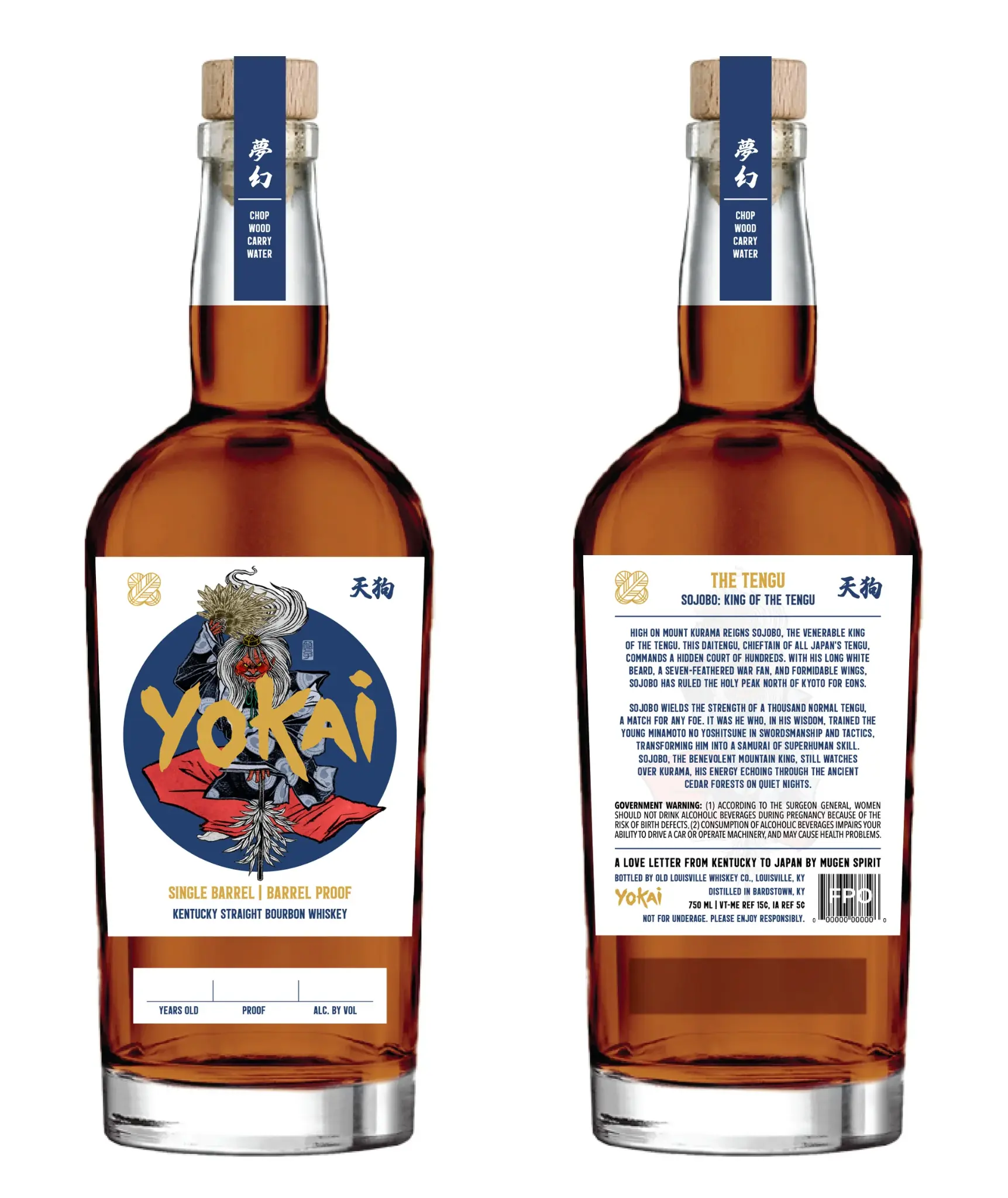
From Mountain to Barrel
The Sojobo Lineage Barrel represents the pinnacle of the Yokai Series — a bourbon selected not merely for its age or proof, but for its ability to embody the character of the Tengu King himself. At 144 proof, it arrives with the authority of a being who has stood atop Mount Kurama for a thousand years, undiminished by time.
The 'Lineage' designation speaks to continuity — the idea that each barrel in this expression carries forward the spirit of its predecessors, much as Sojobo carries forward the accumulated wisdom of every Tengu who has ever lived. The tasting notes remain deliberately obscured, described only as 'obstructed by Sojobo's war fan' — a choice that honors the mythology's insistence that true knowledge must be earned, not given freely.
"The liquid does not reveal itself to the casual observer. Like Sojobo himself, it demands that you approach with intention."
Mugen Spirit
Infinite Spirit. Boundless Craft.